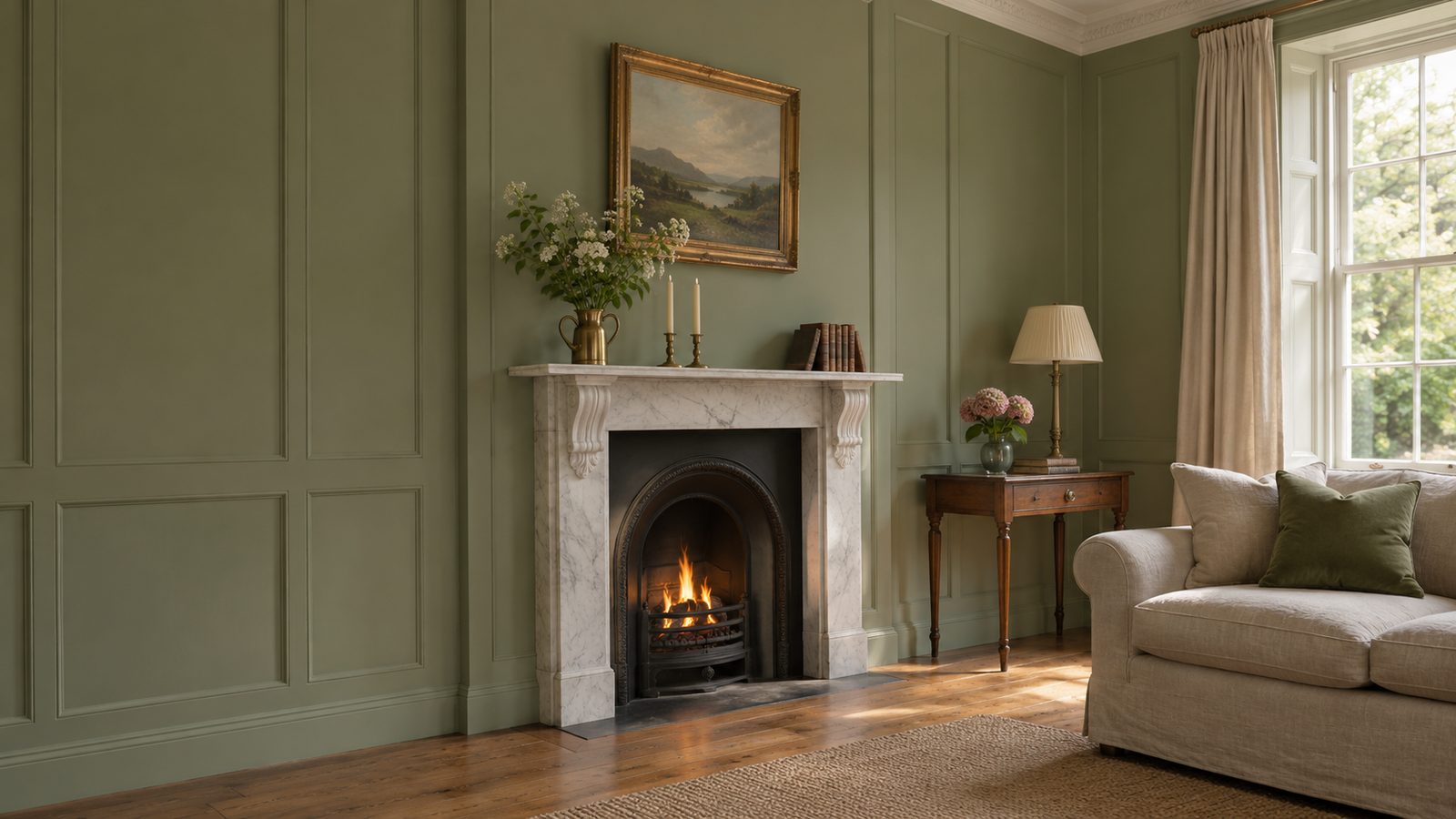
Short answer: no, but some versions of it are. Quick, trend-led panelling is starting to look dated, especially thin strips glued straight onto the wall, grey on grey, and panelling on every wall of the house. Classic panelling that suits the house, is fitted to the room's proportions and does a real job, like wainscoting in a busy hallway, is not going anywhere.
Panelling has been part of Irish and British homes for centuries, long before it was an Instagram trend. The question homeowners are really asking on forums like Mumsnet and boards.ie, and in the Irish property pages, is not whether panelling is finished. It is which panelling will still look good in ten years. This guide answers that.
Is Wall Panelling Still in Style in 2026?
Yes. What has changed is the kind of panelling people want. A few years ago, panelling went up fast and everywhere: DIY kits, feature walls in every room and whatever was trending that month. Some of that now looks tired.
The panelling that has held up is the kind that has always been there: proportioned wainscoting in hallways, frames that suit the age of the house, and panelling chosen for a reason, such as protecting walls, hiding tired plaster or reducing echo. Even articles asking whether the trend is ending agree that simple, waist-height panelling with a top rail is still one of the best ways to protect a busy hallway.
6 Panelling Looks That Are Starting to Date
These are the looks that make people ask whether panelling has had its day:
- Thin strips glued straight onto the wall: Cheap batten kits stuck directly onto plaster show every wave in the wall, crack at the joints and often damage the plaster if they ever come off.
- Panelling on every wall: One well-chosen panelled wall or room has impact. Panelling in every room of the house starts to feel like a theme.
- Grey on grey: Cool grey panelling under a cool grey wall was everywhere a few years ago and now tends to look flat, especially in north-facing Irish rooms.
- Busy geometric designs: Diagonal and zig-zag patterns are fun for a season, but they date faster than simple frames and lines.
- Panelling that ignores the room: A rail at the wrong height, frames that do not line up with doors and windows, or a style that fights the age of the house will always look added on rather than built in.
- Plastic and peel-and-stick panels: In living spaces, up close they look and feel like what they are, and they rarely survive a few years of knocks in a hallway.
5 Panelling Styles That Will Still Look Good in 10 Years
These are the styles we would put in our own homes:
- Wainscoting in hallways and on stairs: Wainscoting on the lower third of the wall has been protecting busy walls for generations. It looks right in period homes and new builds, and it earns its place every day. See our hallway and staircase panelling guide.
- Frame panelling that suits the house: Simple rectangular frame panelling, sized to the room, suits almost any Irish home. In older houses it looks original; in newer ones it adds the character the builder left out.
- Raised panelling in period homes: In a Georgian, Victorian or Edwardian house, traditional raised panelling are not a trend at all. They are part of the architecture.
- One considered feature wall: A full-height panelled wall behind a bed or in a dining room, painted in a colour you love, ages far better than panelling on every wall.
- Acoustic panelling that does a job: Slatted acoustic panels on a media wall or in a home office are there to cut echo, so they stay useful even as tastes change.
How to Make Sure Your Panelling Doesn't Date
Use these five checks before you choose a style:
- Suit the house: Match the panelling to the age and style of your home rather than to what is trending online.
- Get the proportions right: Half-height panelling usually looks best at about one-third of the wall height, and frames should line up with doors, windows and the pitch of the stairs.
- Give it a job: Panelling that protects a wall, hides tired plaster, adds storage or reduces noise never looks like a trend, because it is not one.
- Treat paint as the flexible layer: The panelling is the long-term structure. The colour is what you change when your taste changes.
- Pay for a good fit: Gaps, wavy rails and visible nail holes make even classic panelling look cheap. Our guide to common panelling problems shows what poor fitting looks like.
Panelling Colours That Age Well
Colour dates faster than panelling, so this is where most regrets happen. These choices tend to last:
- Warm whites and soft stone: Calm and easy to live with. Test them in your own light first, because some off-whites turn yellow under warm hallway bulbs.
- Greige and putty tones: Warmer than grey, so they suit Irish light and work with wood floors.
- Muted greens and blues: Sage, olive and soft blue-grey have been used on panelling for a very long time and feel classic rather than trendy.
- One colour everywhere: Painting the panelling and the wall above in the same colour is calm and modern, and lets the shadows of the panelling do the work.
- Darker below, lighter above: A deeper colour on the panelling with a lighter wall above adds depth and hides scuffs in a busy hall.
Avoid very dark colours in narrow, dark hallways, and always paint a sample on the wall and look at it in the morning and the evening before you commit. Your painter applies the final colour: we leave every job filled, caulked and sanded, ready to paint.
What If You Change Your Mind? Can Panelling Be Removed?
Yes. Properly fitted panelling can be taken down if you ever want a different look. Expect to fill the fixing holes, and some walls may need a skim coat of plaster afterwards, especially where cheap strips were glued straight onto the plaster.
Most people never need to go that far. Because the panelling is the structure and the paint is the finish, repainting is usually all it takes to give panelling a completely new look.
Get Panelling That Lasts
RS Interiors is a wall panelling company based in Ratoath, Co. Meath, with over 10 years of experience, and panelling is all we do. We design every scheme around the house and the room, not the trend of the month, so it still looks right years from now.
Contact us with a photo of your room and your Eircode, or message us on WhatsApp, for a free estimate, usually within 24 to 48 hours. We fit wall panelling across Meath, Dublin and the surrounding counties.
3 Main Takeaways
- Wall panelling is not going out of style, but quick, trend-led versions are dating: thin glued-on strips, grey on grey and panelling on every wall.
- Wainscoting in hallways, frame panelling that suits the house and panelling that does a real job are the styles that last.
- Colour dates faster than panelling, so choose warm, muted tones and treat paint as the part you change when your taste changes.