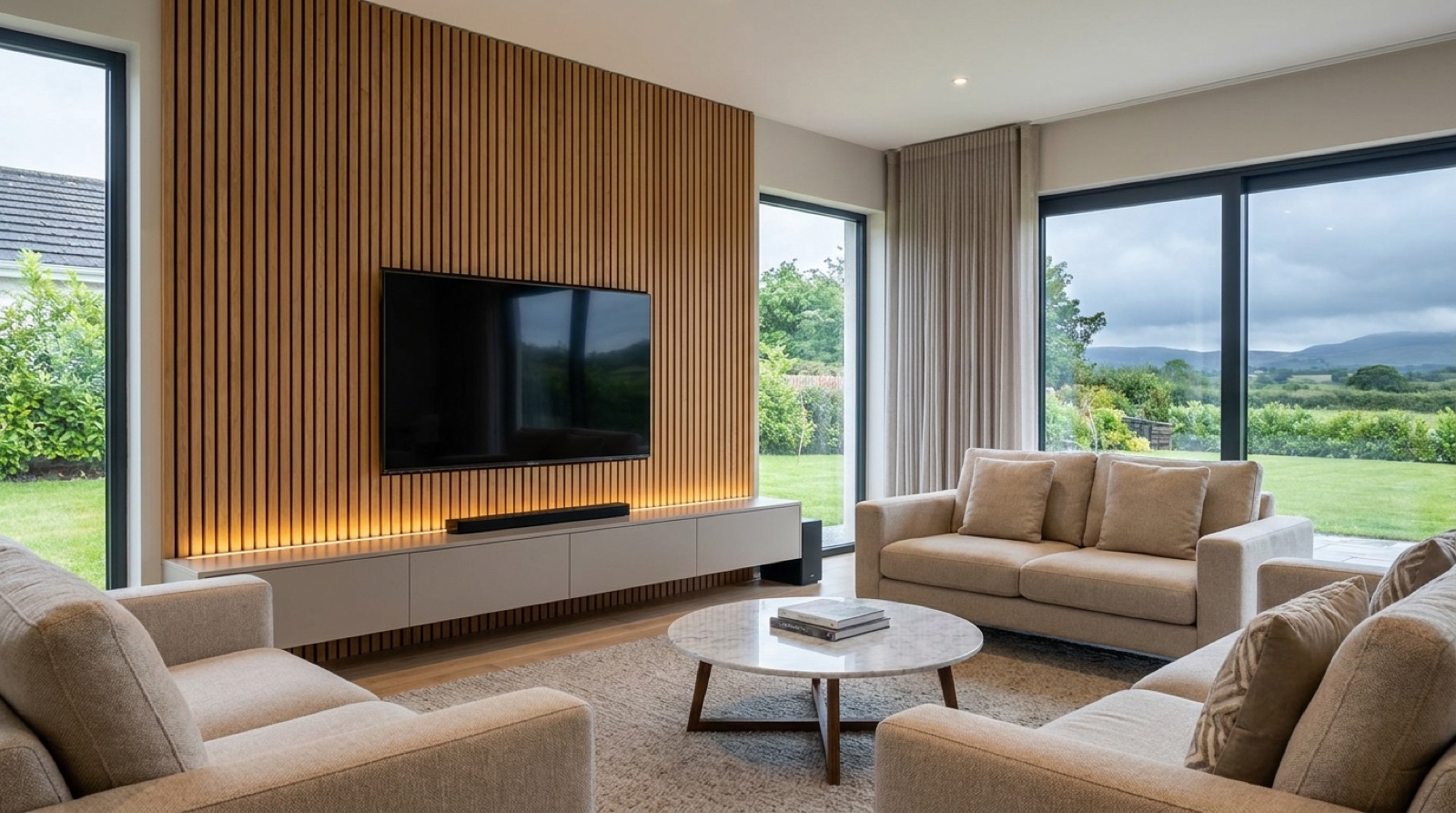
You have been looking at wall panelling for a while now. Saved photos, a few showroom visits, maybe a board of ideas that has grown a little out of hand. And still the big question is sitting there: which panelling is right for my home?
It is a fair thing to worry about. Panelling is a real commitment to your walls, and you want it to look as good in ten years as it does on the day it goes up. The good news is that the right choice is rarely about chasing the latest trend. It comes down to three things: the character of your house, how you live in it, and the feeling you want when you walk through the door.
This guide takes you through each one, room by room, so you can narrow your options with confidence before you ever sit down with an installer.
Start With the Character of Your House
Every home already has a personality, and the best panelling works with it rather than fighting it.
- Period homes (Victorian, Edwardian, or older cottages): Traditional shaker-style or raised panels suit the proportions of higher ceilings and original features. Half-height panelling along the hallway or stairs echoes the classic dado rail look.
- Family homes from the 1970s to the 2000s: Simple, clean profiles such as flat shaker panels or board and batten can refresh a home that feels dated, without looking out of place.
- Modern new builds: Vertical slats or smooth, minimal boards suit bright, open spaces and clean lines.
- Country homes: Wider natural wood panels or groove profiles feel warm and settled alongside stone, timber and big windows.
A good question to ask yourself: when you picture your favourite room in your house, what do you notice first? The light, the proportions, the fireplace? Choose panelling that frames what you already love.
Think About How You Really Live
Your daily life matters as much as your taste. A beautiful wall that cannot cope with the school run, the dog or the odd spilled cup of tea is not a success.
- Busy households with children or pets: Choose a durable finish that wipes down easily. Painted MDF is a practical favourite, and a satin or semi-gloss paint cleans more easily than a flat one.
- Entertaining often: A panelled dining room or hallway sets a welcoming tone the moment guests walk in.
- Working from home: Slat panelling behind your desk gives a calm, polished backdrop for video calls and can soften the echo in a room.
- A quiet retreat: A bedroom with panelling in a deeper tone creates a snug, enveloping feel that suits winding down at the end of the day.
Get the Height Right for Your Ceilings
Height changes how a room feels more than almost any other decision you will make.
- Half-height (wainscoting): Adds charm and detail while keeping the room light. A good choice for smaller rooms, or if you want to start gently.
- Three-quarter height: Gives real impact without overwhelming the space. Works well on stairs and in hallways.
- Full height: Dramatic and luxurious. Best in rooms with good ceiling height and a clear focal wall, such as a bedroom or sitting room.
As a rule of thumb, if your ceilings are low, a full-height run can make a room feel closed in, so a half or three-quarter height often looks more balanced. If your ceilings are high, full height helps the room feel finished rather than empty.
Choose a Colour That Feels Like Home
Colour is where your personality comes in, and it is easier to live with than many people expect.
- Soft neutrals (warm white, greige, stone): Calm and timeless, and they let your furniture and artwork take centre stage.
- Deeper tones (forest green, navy, warm terracotta): Rich and enveloping, especially in a sitting room or dining room with good lighting.
- Natural wood (oak or walnut tones): Warm and textured, and a natural partner for timber floors and soft fabrics.
A simple test: paint a large sample board and live with it for a few days. Look at it in the morning light and again in the evening with the lamps on, because colours can change a lot depending on the light in your home.
Painted panelling can also be refreshed in a new colour later, which takes the pressure off getting every detail perfect on the first attempt.
Work With What You Already Have
You do not need to replace everything to make new panelling look right. Look at your sofa, rugs, curtains and wood tones before you decide.
If your room is full of warm timber and soft textured fabrics, a natural wood or warm-toned panel will sit beautifully. If your style is cleaner and more monochrome, a painted shaker or slat in a soft neutral will feel right at home.
Room-by-Room Starting Points
- Living room: A feature wall behind the sofa or TV in slat or shaker panelling. It is the wall everyone sees first.
- Hallway and stairs: Three-quarter height makes a welcoming first impression and protects the walls from bags, buggies and shoulders.
- Bedroom: Full height behind the bed for a dramatic focal point, or a half-height run on one wall for a softer, layered look.
- Dining room: Half-height panelling protects the lower walls from chairs and busy meals, and adds warmth to the room.
- Kitchen or bathroom: Ask your installer about moisture-resistant materials before you choose a finish.
- Home office: Slat panelling on the wall behind the desk for a calm, professional look and softer sound.
Budget Without Compromise
You do not have to do the whole house at once. Many homeowners start with a single feature wall, the hallway, or a half-height run, then add rooms over time.
Starting with the room you use most often is a good way to get the biggest benefit early. You will feel the difference every day, and it makes the next decision easier.
Before You Book a Consultation
Choosing is much easier when someone can see your space. Having a few things ready will make the conversation smoother:
- Photos of each room you are considering, taken in both daylight and evening light.
- A short list of how each room is used, including who is in it most and at what times.
- Photos or swatches of your main furniture, rugs and curtains.
- Any must-haves, such as hiding a radiator, a socket or an awkward alcove.
- A rough budget range, so options can be shown at the right price points.
Let a Professional Help You Decide
Once you know the style, height and colour you are leaning towards, a professional can confirm the details. RS Interiors offers free consultations across Meath, Dublin and the surrounding counties. We will look at your rooms, talk through how you live, and show you options at different price points, with a clear quote before anything begins.
3 Main Takeaways
- Let the character of your house guide the style: period homes suit traditional panels, while modern homes suit slats and clean boards.
- Choose the height for your ceilings and how you use the room, so the space feels balanced rather than closed in or bare.
- Test colours in your own light before you commit, and remember that painted panelling can be refreshed later.